Left to Survive: Survival Game
- 4.5
- Rating
- 50.00M
- Installs
- Free
- Price
 Analysis by App-foxy
I went into Left to Survive expecting a straightforward zombie shooter, but its appeal became clearer after several sessions: it is built around a quick cycle of entering danger, making fast decisions, collecting the result, and starting again with a slightly stronger reason to continue. That structure makes it easy to play in short bursts, while the action gives each attempt enough pressure to feel more involved than a simple target-practice game.
This is a free action game from MY.GAMES HOLDINGS LTD, designed for players who enjoy third-person shooting, apocalyptic settings, and multiplayer competition. It is rated Mature 17+, so it is aimed at an adult audience rather than younger casual players. The game has reached over 50 million installs and carries a 4.5 average from around 654 thousand ratings, which matches my impression that it has found a broad audience without being limited to dedicated shooter fans.
How the first action sets the pace
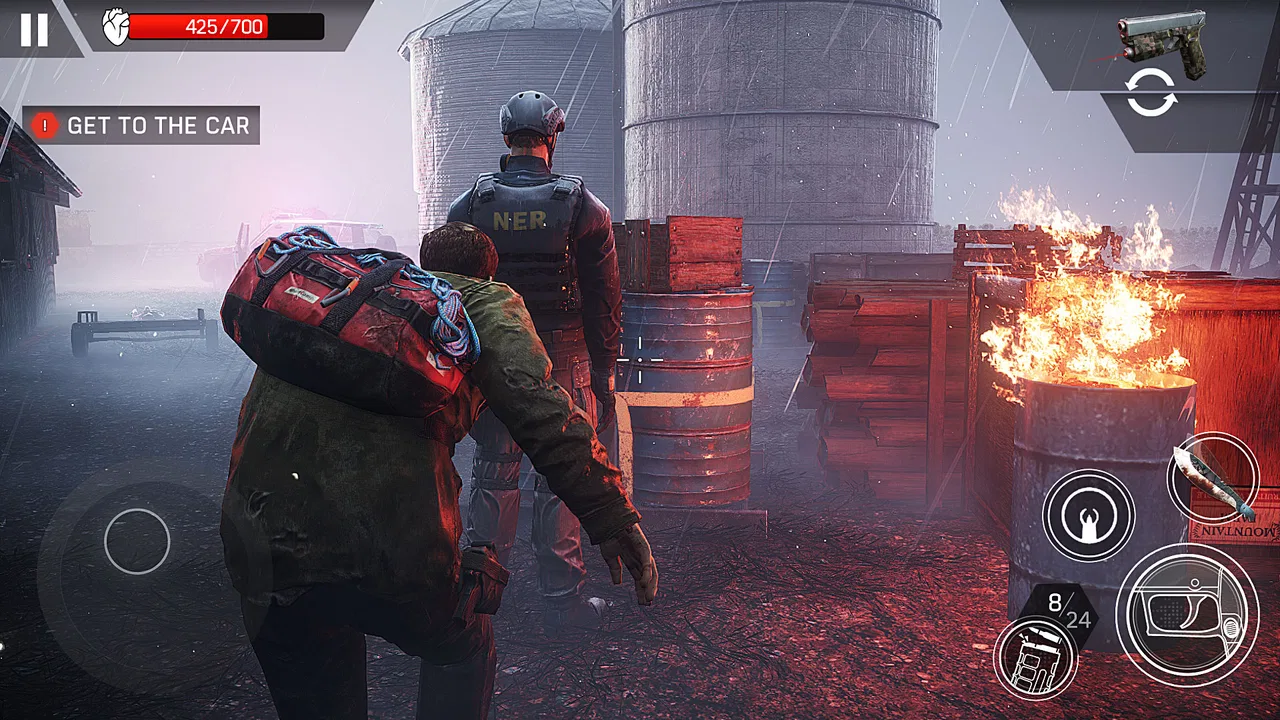
The opening appeal is immediate: I move into a ruined environment, identify the threat, aim, and fire before the zombies can overwhelm the area. The controls are easier to understand than the setting is to survive. That matters on a phone, where a complicated interface can turn a tense encounter into a struggle with buttons.
You May Also Like

 Blood Strike: 2.5 Anniversary
Blood Strike’s Loadouts Turn Every Drop Into a Tactical Gamble
A close look at Blood Strike’s custom loadouts: how fast access to signature weapons reshapes its battle royale rhythm, rewards preparation, and narrows the gap between fights.

 Pandora - Music & Podcasts
Pandora’s Music Is Easy to Start, but Harder to Recover
Pandora’s strength is its low-effort path from a seed to a station. Its weak spot is how much confidence it asks you to place in connection, setup, and quiet recovery.

 8 Ball Pool
 Is Built on Rivalries, Rematches, and Routine
A close look at the rivalries, rematches, shared routines, and unanswered safety questions that turn a quick pool match into a persistent mobile community.

 Samsung Music
’s Quiet Strength Is Playing What You Already Own
Its reach comes less from spectacle than from dependable access to a personal library. That simplicity is both the app’s strongest retention engine and its ceiling.

 AccuWeather: Weather Radar
AccuWeather Review: A Quick, Clear Forecast for Everyday Decisions
For everyday plans, the best forecast is the one you can understand quickly. AccuWeather makes rain timing, radar, and local conditions easy to act on, with a few trade-offs.

 Hill Climb Racing
Why Hill Climb Racing Still Turns Crashes Into One More Run
A tiny car, a bumpy hill and one more upgrade: Hill Climb Racing keeps resurfacing because its simple chaos makes every near-miss feel personal.
More From Our News Desk



What I like is that the game makes the first decision obvious but not always easy. Shooting the nearest zombie may protect me for a moment, yet it can also leave another threat approaching from a worse angle. I quickly learned to avoid treating every enemy as an isolated target. Position, timing, and awareness of the surrounding space matter just as much as pulling the trigger.
The third-person view gives the action a useful balance. I can see the character and enough of the environment to read the situation, but the camera does not make the game feel like a distant strategy title. The result is a more physical kind of shooting: I am constantly checking where danger is coming from, deciding whether to finish a target, and thinking about whether moving now is safer than firing again.
That first action also explains who will enjoy the game. If you want a slow survival experience focused on crafting, exploration, or building a detailed base, this is not the most natural choice. Its strongest identity is combat. The post-apocalyptic setting gives the shooting context, but the moment-to-moment pleasure comes from controlling the encounter rather than quietly managing resources.
For a typical evening, I can imagine playing it while waiting for dinner or taking a short break. One session begins with a clear objective, turns into a compact burst of aiming and movement, and ends before the game demands a full uninterrupted hour. That convenience is useful, although players who prefer long narrative chapters may find the repeated mission structure less satisfying.
Why the shooting feels better when I stop rushing
My most useful adjustment was to stop firing as quickly as possible. The instinctive approach is understandable in a zombie game, but hurried shots can make the encounter feel chaotic. I had better results when I used the environment to create a little distance, focused on the most immediate threat, and treated ammunition and timing as part of the decision rather than background details.
This is one of the less obvious strengths of the game: its simple control scheme leaves room for personal discipline. Two players can enter the same kind of situation and produce very different results because one keeps a safe angle while the other panics and lets enemies close in. That difference gives the action more staying power than the basic premise suggests.
I also found that the game rewards learning the shape of a mission. The first attempt is often about discovering where pressure builds. A later attempt becomes more deliberate because I already know where I want to stand, which threat deserves attention, and when it is better to move instead of trying to win a firefight from the same spot. That creates a natural reason to replay without requiring every run to feel completely new.
The feedback rhythm: danger, response, and control
The central rhythm is easy to describe: enemies create pressure, I respond with movement and shooting, the game confirms whether that response worked, and the result pushes me toward another encounter. Good action games make this loop readable, and Left to Survive generally does that well. Hits feel connected to my decisions, while mistakes are usually understandable rather than random.
I appreciate that the feedback is not only about eliminating zombies. Surviving a crowded moment, reaching a safer position, or dealing with a threat before it interrupts the next action can feel like a small victory. Those moments keep the game from becoming a flat sequence of tapping at targets. The best encounters have a rising pulse: I start controlled, lose some space, regain it through a quick decision, and finish with just enough relief to want another round.
The multiplayer side changes that rhythm. Against human opponents, I cannot rely on the predictable behavior of zombies. A real player may take a different angle, wait for an opening, or punish a careless movement. That makes the competitive element more demanding and gives the game a reason to remain interesting after I understand the basic controls.
At the same time, multiplayer is where the experience can feel less forgiving. A mistake against zombies may teach me something for the next attempt. A mistake against another player can end the session before I have time to adjust. Players who enjoy competitive pressure will see that as the point, while anyone looking for a relaxed zombie adventure may prefer to spend more time with the noncompetitive parts.
The feedback rhythm is also tied to the mobile format. I do not need to remember a complicated combination of commands before starting. I can return after a few days and understand the immediate task quickly. That accessibility is valuable, but it comes with a trade-off: the game can feel more focused on repeating a proven action pattern than on offering the broad freedom of a console survival game.
Where the game asks for patience
The action is accessible, but improvement is not always instant. At some point, better results depend less on learning how to aim and more on understanding when to spend effort, when to replay, and when to accept that a stronger character or weapon would make the situation more manageable. That progression can be motivating, though it may also create friction for players who want every mission to be won through skill alone.
The free entry point is helpful because I can try the core experience without paying upfront. However, the game includes in-app purchases ranging from $0.99 to $369.99 per item. That is a significant range, and it is the main reason I would advise setting a personal spending limit before getting deeply invested. The game is easier to enjoy when purchases remain optional tools rather than becoming the expected solution to every difficult stretch.
I would not call this a flaw unique to the title, but it affects how I judge the progression. A player who enjoys earning improvements gradually may appreciate the long-term structure. Someone who dislikes any pressure around optional spending should approach cautiously, especially if competition makes upgrades feel more important. The right question is not whether the game can be played for free, but whether its progression style matches your tolerance for repetition and temptation.
What the reward changes from one session to the next
The reward is more meaningful when it changes how I approach the next attempt. Completing an objective, surviving a difficult encounter, or improving my equipment gives the following session a purpose beyond simply repeating the previous one. That is the point where the game’s action loop becomes a progression loop: I play, receive a result, adjust my approach, and return with a new target in mind.
I found this especially useful after a failed mission. Failure did not automatically feel wasted if it revealed a positioning mistake or showed me that I was trying to solve the encounter too aggressively. The next attempt had a clear question attached to it: could I keep more distance, prioritize another threat, or reach the dangerous section with a better plan?
That kind of reward is easy to overlook because it is not always a dramatic story moment. The practical benefit is that the game gives me reasons to care about small improvements. A slightly cleaner run can matter because it reduces the pressure of the next battle. A better understanding of the combat flow can matter because it saves me from repeating the same error.
For players who enjoy collection and progression systems, the appeal is obvious. There is always a sense that the current version of my character or arsenal is not the final one. For players who prefer a tightly balanced arcade challenge, the progression may feel less pure. The question becomes whether you enjoy growing stronger alongside your skill, or whether you want success to depend almost entirely on execution.
How I would handle upgrades and purchases
My advice is to avoid spending immediately just because a mission becomes uncomfortable. First, I would replay the stage, change my positioning, and see whether the problem is tactical rather than numerical. This is a practical way to protect the free-to-play experience: use the game’s retry loop as a learning tool before treating payment as the answer.
I would also decide what kind of player I am before entering multiplayer seriously. If I mainly want the zombie action and occasional competition, gradual progress should be enough to keep the game enjoyable. If I want to compete intensely, I need to accept that progression and spending choices may become more noticeable. That distinction is important because the same purchase system feels very different in a relaxed solo session than it does during a competitive loss.
The developer’s current version is 8.6.0, and the game supports devices running Android 9 or later. Those details make it worth checking compatibility before installing, particularly if the phone is older. The game is free to download, but I would still treat storage, performance, and sustained play comfort as practical considerations for any visually active mobile shooter.
The session reset and the reason to begin again
A good reset does not erase the previous session; it gives that session a purpose. Left to Survive uses failure, completion, and progression to make the return feel understandable. I may start again because I want to clear a mission more cleanly, improve my standing, test a stronger approach, or simply enjoy a few minutes of shooting without committing to a long campaign.
This reset works best when I have a specific reason to return. “Play another mission” is not enough by itself, but “try the same encounter while protecting my position” is. The game’s structure supports that mindset because the action is direct and the consequences are easy to read. It is not a slow simulation where progress disappears into menus; the next attempt is usually connected to something I just did.
Still, repetition can become the game’s biggest weakness. If I am not interested in improving a run, unlocking more progression, or testing myself against other players, the loop can start to feel familiar. The zombie theme provides atmosphere, but it cannot completely hide the fact that many sessions revolve around entering combat, managing threats, collecting the result, and doing it again.
That makes the game a better companion for regular short play than for a single dramatic weekend marathon. I can see myself returning because the barrier to action is low. I am less convinced that every player will want to spend a long uninterrupted stretch inside the same progression pattern. People who prefer story-heavy adventures, open-world discovery, or survival crafting may find more variety elsewhere.
Who should install it, and who should skip it
I would recommend it to someone who wants a mobile shooter with a clear zombie theme, quick combat, and a progression system that gives repeated sessions a purpose. It is also a good fit for players who like switching between predictable enemy encounters and the sharper pressure of multiplayer. The game’s free price makes it easy to test without making an upfront commitment.
I would be more cautious recommending it to a player under the Mature 17+ age rating, or to anyone who dislikes violent action. I would also steer away a person who wants a peaceful survival sandbox, deep crafting, or a purely skill-based competitive shooter without progression pressure. Those preferences point toward different types of games, and this title is strongest when its action loop is exactly what the player wants.
Compared with a traditional single-player zombie campaign, this game is more convenient and replayable but less likely to deliver a carefully paced cinematic journey. Compared with a competitive shooter, it offers a more distinctive survival setting and a clearer connection between combat and long-term growth, but players may notice the free-to-play progression more. Compared with a survival sandbox, it is faster and more focused, while offering less freedom to create your own solutions.
My verdict on the complete loop
After looking at the full cycle, I think Left to Survive succeeds because its parts connect cleanly. The first action is easy to enter, the feedback makes decisions understandable, the reward gives the next session a purpose, and the reset is quick enough to encourage another attempt. That is a strong foundation for a mobile action game.
Its limitations are equally clear. Repetition can wear thin, competitive play may increase the pressure to progress, and the wide range of in-app purchase prices means players should approach the economy carefully. The game is not trying to be a quiet survival simulator or a pure esports shooter, so judging it by those standards would miss its actual strengths.
For me, the best way to play is in focused sessions: enter with one tactical goal, pay attention to why the encounter succeeds or fails, collect the improvement, and then decide whether the next attempt sounds enjoyable rather than automatic. That approach keeps the loop from becoming mindless. The real reward is not simply surviving another mission; it is returning with a better plan.
With its free entry, mature zombie action, and large established player base, it is easy to understand why the game continues to attract attention. I would recommend trying it to anyone who wants fast third-person shooting on mobile and is comfortable with progression and optional purchases. Just keep your expectations specific: this is a repeatable action game built around the next fight, not an endlessly open apocalypse to explore.
FAQs for Left to Survive: Survival Game
01What is Left to Survive: Survival Game about?
Left to Survive is a third-person zombie survival shooter for Android and iOS. You fight through infected locations, rescue survivors, collect resources, upgrade your base, and unlock stronger weapons and characters. The game combines story missions with action-focused combat, base development, and competitive modes, so it is more than a simple shooting game. Expect frequent battles, progression systems, and a strong emphasis on improving your equipment.
02Can Left to Survive be played offline?
The game generally requires an internet connection for most of its features. Online access is used for account synchronization, events, updates, rewards, advertisements, purchases, and multiplayer or competitive activities. Some previously loaded content may appear accessible for a short time without a connection, but it should not be considered a fully offline game. A stable Wi-Fi or mobile data connection is recommended for reliable progress and uninterrupted gameplay.
03Is Left to Survive free to download and play?
Left to Survive is free to download, but it includes optional in-app purchases. You can complete missions, earn resources, upgrade characters, and progress without paying, although advancement may become slower as the difficulty increases. Purchases can provide premium currency, useful items, bundles, or time-saving advantages. Players should review the store prices and enable purchase restrictions, especially if the game will be used by children.
04Does Left to Survive include multiplayer or competitive gameplay?
Yes, Left to Survive offers more than its single-player campaign. Depending on the current version and available events, players can take part in competitive modes, challenge other users, or participate in activities involving rankings and online rewards. These modes add variety but may also introduce stronger opponents and additional progression pressure. If you prefer a completely relaxed solo experience, the competitive features may feel demanding.
05What devices are recommended for playing Left to Survive?
The game is designed for modern Android and iOS devices, but its 3D graphics, frequent action, and online features can be demanding. A relatively recent phone or tablet with sufficient free storage, updated system software, and stable performance will provide a better experience. Older or entry-level devices may show longer loading times, reduced visual quality, heating, or battery drain. Downloading over Wi-Fi is advisable because game updates can be large.
Pros
- Fast-paced third-person shooting controls work well on mobile.
- A wide range of weapons supports different combat styles.
- Base upgrades give progression beyond individual missions.
- Regular events add variety and extra rewards.
- Playable offline in some modes
- useful when traveling.
Cons
- Energy limits can interrupt longer play sessions.
- Upgrade materials become increasingly difficult to collect.
- PvP matchmaking may pair beginners with stronger players.
- Some missions rely heavily on repeated objectives.
- The game requires substantial storage and device resources.

Left to Survive: Survival Game
Gallery